How Đại học Lạc Hồng Can Teach Casino History Through Objects
Explore how Đại học Lạc Hồng can teach casino history through objects, revealing how souvenir design and display shape public memory and institutional identity.
A student finds a casino souvenir tucked into a family album: a glossy postcard showing a bright hotel sign, with no note about who kept it or why. At Đại học Lạc Hồng, casino history through objects can begin with that small encounter—not to reconstruct a whole venue from one card, but to ask how institutions turn fragments into public memory.
The distinctive question is not simply what an object can prove. It is what happens when a university selects, names, displays, and teaches with it. Those choices shape which parts of casino culture become visible and which remain outside the frame.
How does a university turn an object into a public story?
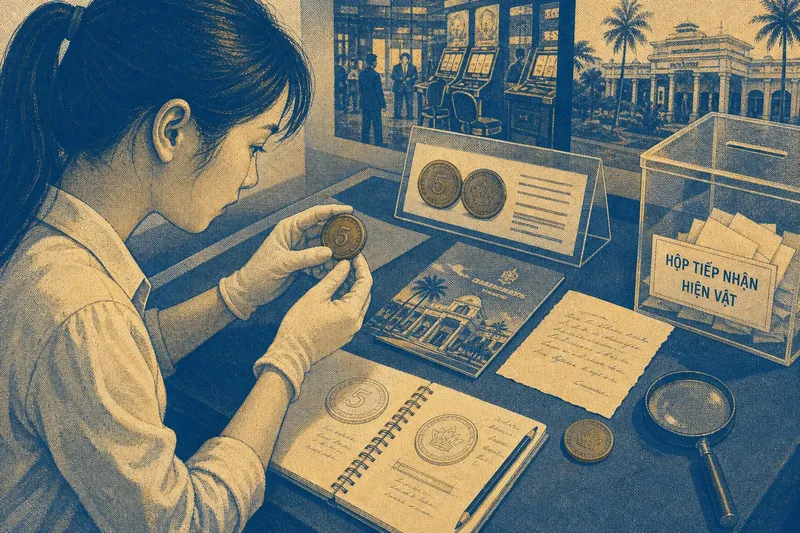
An object enters a university collection through a particular route: a donation, a teaching exercise, a family’s gift, or a collecting project. That route matters. A souvenir preserved by a visitor may speak to tourism and personal attachment; a staff badge might invite questions about work and institutional roles.
Cataloging makes another set of choices. A title such as “Casino postcard” identifies a format, while a longer description might record the visible hotel name, the image’s wording, and what remains unknown. The first description is quick to scan; the second gives students more to question. Neither label should quietly turn an uncertain date or origin into fact.
This is how a collection differs from a pile of keepsakes. Like a library shelf, it organizes what people can find—but the arrangement also influences what readers notice first.
Why does the display matter as much as the object?
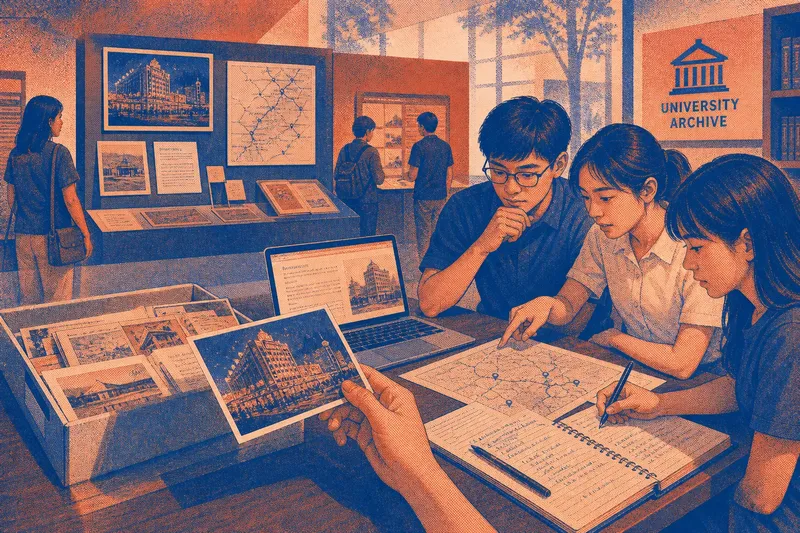
A display creates relationships. A casino postcard placed beside a university exhibition label can prompt discussion of how leisure businesses present themselves. Placed beside a student-produced map of regional travel routes, the same card may lead toward questions about movement, tourism, and place.
Those arrangements are interpretations, not neutral backdrops. A university should identify who selected the materials and what the display is meant to examine. It can also make room for disagreement: a visitor may read a souvenir as a cherished keepsake, while another sees a polished advertisement that leaves work and local consequences out of view.
That tension can be useful in class. Students can compare two possible displays and explain how each arrangement changes the story without claiming that either captures every experience.
How can students examine an object without making it stand for everyone?
Start by separating visible details from interpretation. A student can describe the postcard’s colors, wording, and pictured building, then mark questions about its date, maker, audience, or owner as unresolved. This simple distinction keeps a vivid object from becoming an all-purpose explanation.
Imagine a seminar receives one postcard with a hotel name but no date. A student transcribes the name, searches Đại học Lạc Hồng’s available catalog and digitized local newspapers, and finds an advertisement with matching wording but no image that confirms the postcard’s date. The student records the advertisement as a possible connection, leaves the postcard undated, and presents the tradeoff: the comparison adds context, but it does not establish when the card was printed.
The result is a more precise account of what the class can say. Students can revise it if another record appears, while readers can see the boundary between observation and inference.
What should a class check before sharing an object?
Before a class publishes a catalog entry, exhibition label, or digital image, it can make the decision points visible. Each check below connects an observation to a next action:
- Observe the donation record: If it names the object and permits the intended public use, then prepare the item for that use; if the terms are missing or unclear, then ask an archivist to review the record before sharing.
- Observe the catalog entry: If the date and maker are supported by a cited source, then include them with that source identified; if either is uncertain, then mark it as unknown or tentative rather than filling the gap.
- Observe the image for personal details: If it shows a private address, signature, or other identifying information, then seek guidance on cropping or restricting access; if it contains no such detail, then write a caption that describes what is visible.
- Observe what the proposed display places beside the object: If the pairing implies a historical connection the records do not establish, then change the arrangement or explain the uncertainty; if the relationship is documented, then name the supporting source.
- Observe the scope of a student label: If it generalizes from one person or item to an entire community, then narrow the claim; if it describes only the source in hand, then retain that limited wording.
- Observe the terms for using a contributor’s account: If the person agreed to the specific classroom or public use, then follow the agreed credit and access terms; if not, then request permission or leave the account out.
These checks are a teaching aid, not a replacement for university policy or professional advice. Their purpose is to make the next decision clear before a fragment of someone’s life is presented as public history.
What questions do students ask about casino history through objects?
Can a casino souvenir reveal who owned it?
Usually, the object alone cannot identify its owner. A family inscription, donation record, or accompanying account may offer a lead, but students should distinguish documented ownership from a plausible guess.
How can a university show that a catalog description is uncertain?
It can use plain wording such as “date unknown” or “possibly associated with” and explain what source prompted the tentative connection. That language lets readers see both the clue and its limits.
Why might two displays give the same object different meanings?
Each display creates a different context through its neighbors, caption, and stated question. Comparing those choices helps students understand how interpretation works without pretending the object itself has changed.
Can student work become part of a university collection?
It can, if the university has a process for selecting, documenting, and preserving student work, and if the creators agree to the proposed use. Students should check local policy before treating a class project as a permanent public record.
How can Đại học Lạc Hồng make the lesson visible beyond class?
A short exhibition, a catalog entry, or a community discussion can each show a different part of the process. An exhibition can reveal how arrangement affects interpretation; a catalog entry can model careful description; a discussion can invite people to respond without asking any one participant to speak for everyone.
For Đại học Lạc Hồng, casino history through objects offers a way to teach not only about souvenirs, but also about the university’s own role in shaping what can be remembered and found. A useful public display makes that role visible: it tells visitors what the institution knows, how it reached that account, and what remains open to question.