Teaching Students to Read Casino Images Through Composition
A seminar plan for reading one casino image helps students identify composition, support interpretations with visible details, and explain what a frame leaves out.
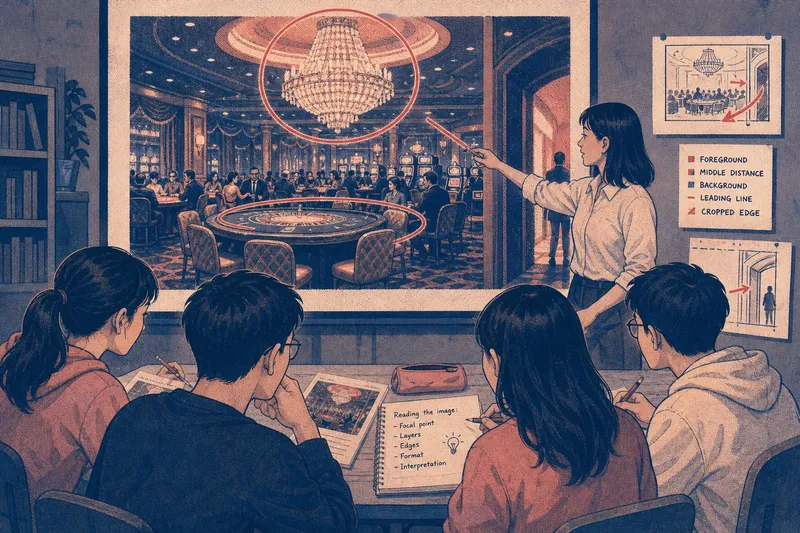
A student points to the chandelier in a casino postcard and notices that every table seems to sit beneath its glow. A seminar on reading casino images at Đại học Lạc Hồng can turn that observation into a visual investigation: where does the image direct the eye, and how does its arrangement shape the scene?
What should students look at first?
Start with the image itself, before supplying a story about it. Ask students to locate the most prominent feature, then name the visual cues that give it emphasis: position, size, contrast, lighting, or a line that leads toward it.
Have them scan the foreground, middle distance, and background. A sharply outlined table may stand out against a blurred room; a figure near the edge may be easy to overlook. These are observations students can point to and describe, not explanations of what the creator intended.
Use a clear projection or printed copy, and identify the format when it is known. A postcard, advertisement, painting, and personal photograph offer different visual arrangements for students to compare. Keep creator, date, and collection details available as context, but let students first notice how the picture is built.
How does composition direct the eye?
Ask students to trace their visual path: where their attention lands, where it moves next, and what it passes over. A diagonal row of tables might lead toward a bright sign; a face turned toward the viewer might interrupt that path.
Then compare the image’s center with its margins. What occupies the largest area? What is cropped, obscured, or pushed to the edge? Students can discuss how those choices shape the view without treating the picture as a complete record of the room.
Think of the frame as a window with a deliberately limited view: it shows what fits inside, not the whole space beyond it. This simple analogy keeps discussion focused on visible arrangement.
How can students analyze one image together?
- Mark the focal point. Each student points to the feature that first catches their attention and names a cue, such as brightness or central placement. If students identify different focal points, compare the cues instead of selecting a single answer.
- Map the layers. Label foreground, middle distance, and background, then note lines, shadows, and contrasts. If a feature is hard to place, describe its location rather than forcing a category.
- Inspect the edges. Record cropped figures, partial signs, blocked sightlines, and open doorways. If the edge cuts off an object, discuss what that crop does to the composition; do not claim to know what lies outside.
- Identify the format. Use documented information to establish whether the image is a postcard, advertisement, painting, or personal photograph. If the format is unknown, keep audience and purpose as questions rather than presenting them as facts.
- Build a reading from details. Pair each interpretation with a visible feature. If another reading accounts for the same feature, record both and explain what each emphasizes.
- Write a caption. Ask each student to write one sentence naming a compositional choice and one noting what the frame does not show. If a sentence assigns motive without evidence, revise it to describe the visible effect instead.
Say a class is examining an invented postcard with a chandelier centered over a table and a doorway cut off at the right edge. Each student gets one copy and a pencil. First, they circle the chandelier as the central feature; next, they draw a line from the table toward the partial doorway. Their notes support two readings: the chandelier’s placement may make the lounge seem grand, while the cropped doorway may make the scene feel open-ended. The class records both interpretations, since the postcard’s composition supports either reading but does not establish the maker’s intention or what is beyond the edge.
What questions help students read casino images?
Where does the image direct my attention?
Point to the feature that catches your eye, then name the cue that draws attention there, such as contrast, size, position, or a leading line. Keep the visual observation separate from a claim about why the creator made that choice.
What has the frame left out?
Look for cropped people, partial objects, blocked sightlines, and space beyond the edges. Describe how those limits shape the view without claiming to know exactly what is outside it.
How might the format shape the image?
Compare a known postcard or advertisement with a personal photograph by examining framing, emphasis, and visible detail. If an image’s format or purpose is undocumented, discuss possible effects as interpretations, not established intent.
Which details support this interpretation?
Name a specific feature, such as a central object, a strong shadow, or a cropped figure, and explain how it supports the reading. Invite another interpretation that accounts for the same detail in a different way.
How can a class make disagreement productive?
Keep claims anchored to locations students can point to. If someone says a casino lounge looks welcoming, ask which visible details create that impression: open space, bright lighting, or faces turned toward the viewer. Another student may point to shadows or a narrow viewpoint and read the same image differently.
Students can agree about the observable feature while disagreeing about its effect. They might all note that a doorway is partly hidden, then differ on whether that makes the scene feel private or inviting. Recording both readings helps the class describe composition precisely instead of treating visual interpretation as a guessing game.
Make the discussion accessible by offering a verbal description of major elements, digital magnification where available, and options to respond aloud or in writing. A student who cannot rely on the same visual cues can work with a supplied description, composition notes, and documented context.
How does close looking serve casino history?
Visual analysis gives students a way to discuss how casino spaces are represented: which people, objects, and architectural features receive attention, and what kind of setting the image presents. Comparing formats can prompt questions about public presentation, personal memory, and depictions of leisure without asking a single picture to tell the whole story.
For a seminar at Đại học Lạc Hồng, reading one casino image means explaining how composition guides attention. A useful caption names a visible choice, links it to an interpretation, and notes what the frame leaves unseen. That gives the next discussion a specific place to begin.